

In an era dominated by e-commerce and global connectivity, the efficiency of delivery services has become a critical factor in the success of businesses. As consumer expectations continue to rise, companies are turning to advanced technologies and innovative solutions to streamline their delivery processes. The latest advancements in Delivery Management Software (DMS) are reshaping the logistics landscape, offering unprecedented capabilities to meet the evolving demands of the market.
One of the most significant developments in DMS is the integration of real-time tracking and visibility features. Modern DMS platforms leverage GPS and RFID technologies to provide businesses and customers with accurate and up-to-the-minute information about the location of their shipments. This not only enhances transparency but also allows for better decision-making, as companies can proactively address any potential delays or issues.
The integration of predictive analytics has revolutionized route planning and optimization within DMS. By analyzing historical data, weather conditions, and traffic patterns, these systems can predict the most efficient routes for deliveries. This not only reduces delivery times but also minimizes fuel consumption, contributing to cost savings and environmental sustainability.
With the increasing importance of secure and reliable delivery services, DMS is incorporating advanced security features. These may include blockchain technology for secure and transparent transactions, biometric authentication for proof of delivery, and tamper-evident packaging solutions. Such features not only protect shipments from theft or damage but also instill confidence in both businesses and customers.
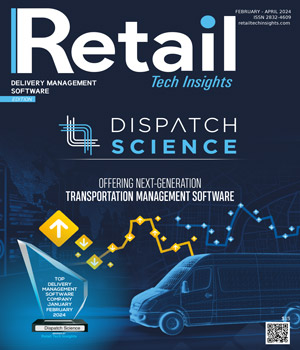
In this edition, we have featured Dispatch Science. Through its next-generation transportation management software (TMS), Dispatch Science removes the complexity of sorting, routing, and delivering thousands of packages daily, saving clients time, money, and fuel. Dispatch Science’s TMS exhibits a fresh, intuitive design for end users, similar to the simplicity found in today’s smartphone apps. This empowers the company to craft a modern user experience by mitigating the clutter and complexity of traditional screens and applications.